
Causes, Symptoms and How Physiotherapy Can Help:
Struggling to lift your arm, reach behind your back or sleep comfortably on your shoulder? You might be experiencing frozen shoulder, also known as adhesive capsulitis.
Frozen shoulder is a painful condition that causes progressive stiffness and restriction of shoulder movement. Everyday activities such as getting dressed, reaching into a cupboard or putting on a jacket can suddenly become difficult.
It can also be incredibly frustrating, particularly when the pain affects your sleep and simple movements become a challenge.
At The Body Lab Physio in Ranelagh, Dublin, we focus on understanding your symptoms, identifying the stage of your condition and developing an individualised treatment plan to help you manage pain, restore movement and regain confidence in your shoulder.
What Is Frozen Shoulder?
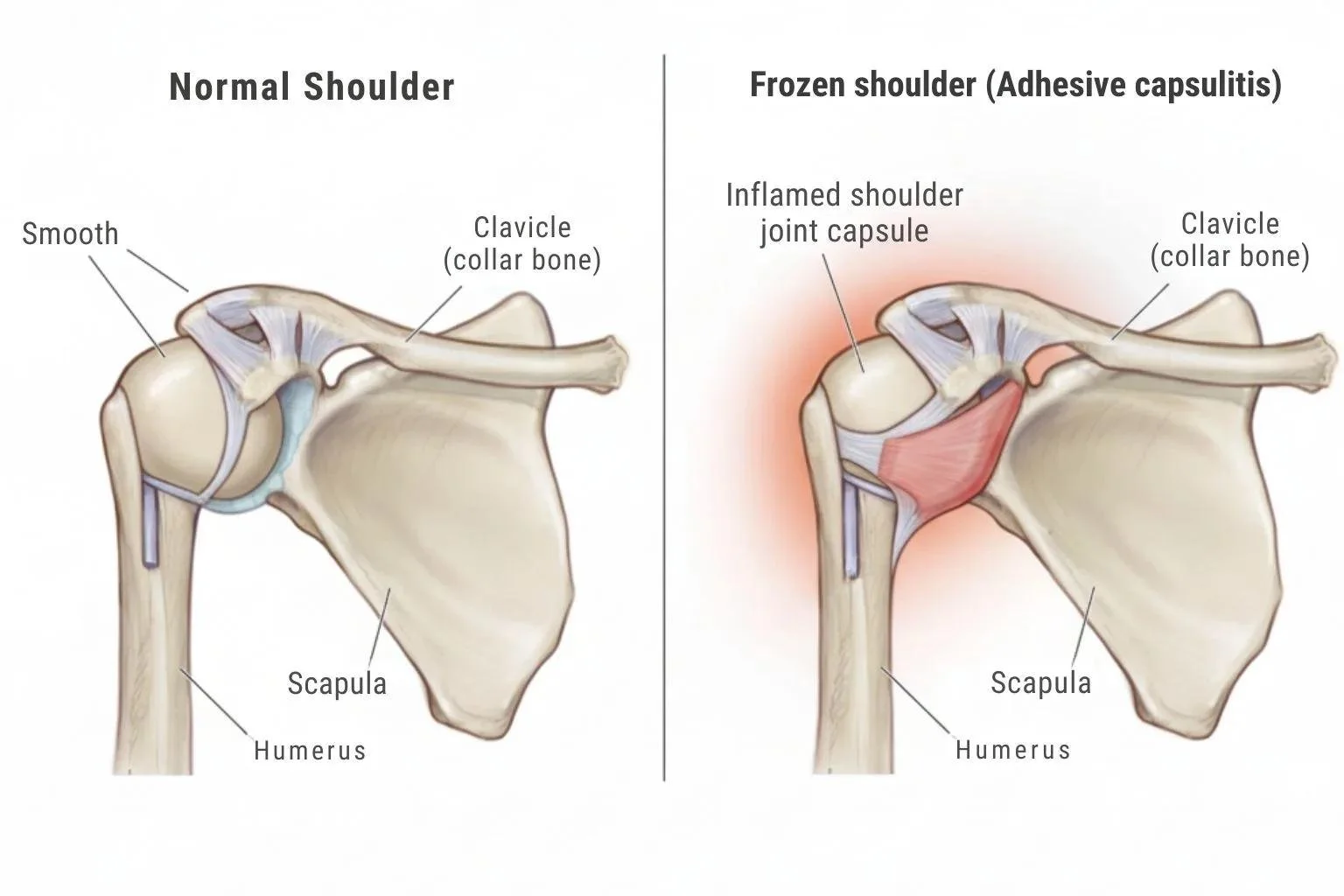
Frozen shoulder, medically known as adhesive capsulitis, is a condition affecting the capsule surrounding the shoulder joint.
The shoulder capsule is a layer of connective tissue that surrounds and supports the joint while allowing movement.
In frozen shoulder, the capsule develops inflammation and fibrosis, becoming thicker and less flexible. This results in pain and a significant restriction in shoulder movement.
One of the key features of frozen shoulder is that both active movement (when you move your arm yourself) and passive movement (when someone else moves your arm) become restricted.
This helps distinguish frozen shoulder from other shoulder conditions, such as rotator cuff-related pain.
What Causes Frozen Shoulder?
In many cases, frozen shoulder develops without an obvious injury or specific cause.
However, certain factors can increase your likelihood of developing it.
These include:
Age: Frozen shoulder is most common between the ages of 40 and 60.
Diabetes: People with diabetes have a higher risk of developing frozen shoulder.
Thyroid conditions: Both hypothyroidism and hyperthyroidism are associated with an increased risk.
Previous shoulder injury: Trauma, surgery or prolonged immobilisation can sometimes contribute.
Reduced shoulder movement: Extended periods of limited movement may increase the risk in certain circumstances.
Frozen shoulder is not simply caused by poor posture, weak shoulder muscles or sleeping in the wrong position.
It involves changes within the shoulder joint capsule itself.
What Are the Symptoms of Frozen Shoulder?
Frozen shoulder usually develops gradually.
Common symptoms include:
Pain deep within the shoulder joint
Increasing difficulty lifting the arm overhead
Restricted movement when reaching behind the back
Pain when putting on a coat or fastening a bra
Difficulty washing or brushing your hair
Night pain that disrupts sleep
Stiffness that gradually becomes more noticeable
A common pattern is a progressive loss of shoulder external rotation — the movement involved when turning your arm outward with your elbow tucked beside your body.
For many people, the pain initially becomes worse before the stiffness becomes the main problem.
The Three Stages of Frozen Shoulder
Frozen shoulder is traditionally described in three stages, although not everyone progresses through them in a predictable way.
1. Freezing Stage: Pain Becomes the Main Problem
During this stage, shoulder pain gradually increases and movement starts to become restricted.
Night pain is common, and everyday activities can become increasingly uncomfortable.
The shoulder may be particularly sensitive to sudden movements or aggressive stretching.
Treatment focus: Pain management, maintaining comfortable movement and avoiding unnecessary irritation.
2. Frozen Stage: Stiffness Becomes More Noticeable
As the condition progresses, pain may become less intense, but shoulder stiffness often becomes the main limitation.
Reaching overhead, behind the back or across the body can remain difficult.
Treatment focus: Gradual mobility exercises, appropriate strengthening and improving functional movement.
3. Thawing Stage: Movement Gradually Improves
During this stage, shoulder mobility and function may begin to improve.
However, recovery can be slow, and some people continue to experience stiffness or limitations for a prolonged period.
Treatment focus: Progressive strengthening, restoring shoulder mobility and returning to normal activities.
Importantly, these stages are a general description rather than a strict timeline. Treatment should be guided by your current symptoms and movement tolerance.
How Long Does Frozen Shoulder Last?
One of the most common questions we hear is:
“Will my frozen shoulder eventually go away?”
Frozen shoulder can improve over time, but recovery varies significantly between individuals.
Some people experience substantial improvement within 12–18 months, while others have symptoms lasting two to three years or longer.
Although frozen shoulder has traditionally been described as a self-limiting condition, research suggests that not everyone regains full shoulder movement without treatment.
This is why an individualised rehabilitation plan can be valuable.
The goal is to help you manage pain, maintain function and progressively improve shoulder movement throughout recovery.
How Do We Treat Frozen Shoulder at The Body Lab?
At The Body Lab, we understand that frozen shoulder isn't simply a stiff shoulder that needs to be stretched harder.
Treatment depends on how painful and irritable your shoulder is, how much movement you have lost and how the condition affects your daily life.
1. Comprehensive Shoulder Assessment
We begin by assessing your shoulder movement, pain behaviour and functional limitations.
We look at:
Active and passive shoulder range of motion
External rotation restriction
Pain during everyday movements
Shoulder strength and muscle function
Neck and upper-back movement when relevant
How your symptoms affect sleep and daily activities
The aim is to establish whether your symptoms are consistent with frozen shoulder or whether another shoulder condition may be contributing.
2. Pain Management and Education
In the early stages, pain can be the biggest obstacle.
Trying to force movement through a highly painful shoulder can aggravate symptoms and make rehabilitation more difficult.
Instead, we focus on finding comfortable ways to maintain movement and reduce unnecessary irritation.
This may include modifying certain activities, adjusting sleeping positions and introducing gentle exercises.
When pain is severe, a corticosteroid injection may be discussed with your GP or an appropriate specialist. Intra-articular corticosteroid injections can provide short-term pain and functional improvement, particularly during the painful stage, and may help you participate more comfortably in rehabilitation.
3. Gentle Mobility Exercises
Maintaining and gradually restoring shoulder movement is an important part of rehabilitation.
Depending on your symptoms, we may introduce:
Pendulum Exercises
Gentle, supported arm movements that allow the shoulder to move without excessive muscular effort.
Table Slides
Sliding your hand forward across a table to gradually encourage shoulder flexion.
Assisted Shoulder External Rotation
Using a stick or your opposite hand to gently guide the shoulder into external rotation within a tolerable range.
Wall Slides
Gradually moving your hand up a wall to encourage comfortable overhead movement.
The goal is not to force the shoulder into positions it cannot tolerate.
Consistency and appropriate progression are more important than aggressive stretching.
4. Manual Therapy
Joint mobilisation and other hands-on techniques may be used alongside exercise to help manage pain and improve movement tolerance.
The type and intensity of treatment depend on the stage and irritability of your shoulder.
In a highly painful shoulder, aggressive mobilisation may worsen symptoms.
As pain settles, more progressive mobility work may become appropriate.
Manual therapy can be a useful addition to rehabilitation, but it is not a guaranteed way to release or break down the thickened shoulder capsule.
5. Progressive Strengthening
As pain improves and shoulder movement becomes more comfortable, strengthening becomes increasingly important.
Prolonged pain and reduced movement can lead to weakness and reduced confidence in using the arm.
Your rehabilitation may include:
Rotator cuff strengthening
Scapular control exercises
Resistance band exercises
Progressive overhead movements
Functional strengthening for work, exercise and daily activities
The goal is to restore not only shoulder mobility but also the strength and confidence needed to use your arm normally.
Should You Stretch a Frozen Shoulder?
Yes, but the intensity matters.
One of the biggest mistakes people make is assuming that the more painful the stretch, the more effective it will be.
In the early, highly painful stage, aggressive stretching can significantly aggravate symptoms.
Gentle, tolerable movement is often a better starting point.
As the shoulder becomes less irritable, stretching intensity and range can be progressed gradually.
Frozen shoulder rehabilitation should work with your shoulder's current tolerance, not constantly push against it.
Can Frozen Shoulder Be Treated With Injections?
In some cases, injections can be a useful part of treatment.
Corticosteroid injections into the shoulder joint may help reduce pain and improve short-term function, particularly when pain is preventing sleep or limiting participation in physiotherapy.
Other procedures, such as hydrodilatation, may be considered in selected cases when stiffness remains significant.
These treatments are not necessary for everyone, and their benefits vary.
A healthcare professional can help determine whether an injection or specialist referral is appropriate.
Physiotherapy remains important for maintaining movement, restoring strength and improving everyday function.
Frozen Shoulder vs Rotator Cuff Injury: What's the Difference?
Frozen shoulder and rotator cuff-related shoulder pain can sometimes feel similar, but there are important differences.
With frozen shoulder, both active and passive shoulder movements are typically restricted, particularly external rotation.
With many rotator cuff conditions, movement may be painful or weak, but passive range of motion is often relatively better preserved.
Other conditions, including shoulder arthritis, can also cause pain and stiffness.
A proper assessment is important to establish the most likely diagnosis and determine whether further investigation is needed.
Can You Exercise With Frozen Shoulder?
In most cases, yes.
Remaining gently active is generally beneficial, provided exercises are appropriate for your current symptoms.
You may need to temporarily modify:
Heavy overhead lifting
Repetitive reaching
Exercises that significantly aggravate shoulder pain
Positions that increase night pain
However, completely avoiding shoulder movement for prolonged periods is usually not helpful.
The aim is to maintain comfortable movement while gradually rebuilding mobility and strength.
When Should You See a Physiotherapist?
Consider booking a physiotherapy assessment if:
Your shoulder is becoming progressively stiffer
You struggle to reach overhead or behind your back
Shoulder pain is regularly disturbing your sleep
Everyday tasks such as dressing are becoming difficult
Your shoulder movement is not improving
You are unsure whether you have frozen shoulder or another shoulder condition
Seek prompt medical assessment if you develop severe pain following an injury, a hot or swollen joint with fever, or sudden significant weakness or neurological symptoms.
Early assessment can help clarify the diagnosis, guide appropriate treatment and prevent unnecessary aggravation.
Frozen Shoulder Treatment in Ranelagh, Dublin
Frozen shoulder can be painful, frustrating and slow to recover from, but that doesn't mean you have to put your life on hold.
At The Body Lab Physio, we take an individualised approach to shoulder rehabilitation, combining clinical assessment, education, appropriate manual therapy and progressive exercise.
Whether you're in the early painful stage or struggling with long-standing shoulder stiffness, we'll help you understand your condition and develop a clear plan to improve movement and function.
No aggressive stretching for the sake of it. No generic exercise programmes. Just a practical, evidence-informed approach to recovery.
Struggling with frozen shoulder or persistent shoulder stiffness?
Book a physiotherapy assessment at The Body Lab and take the first step towards moving more comfortably.
The Body Lab Physio
Ranelagh, Dublin 6
The science of physiotherapy. The craft of recovery.
