
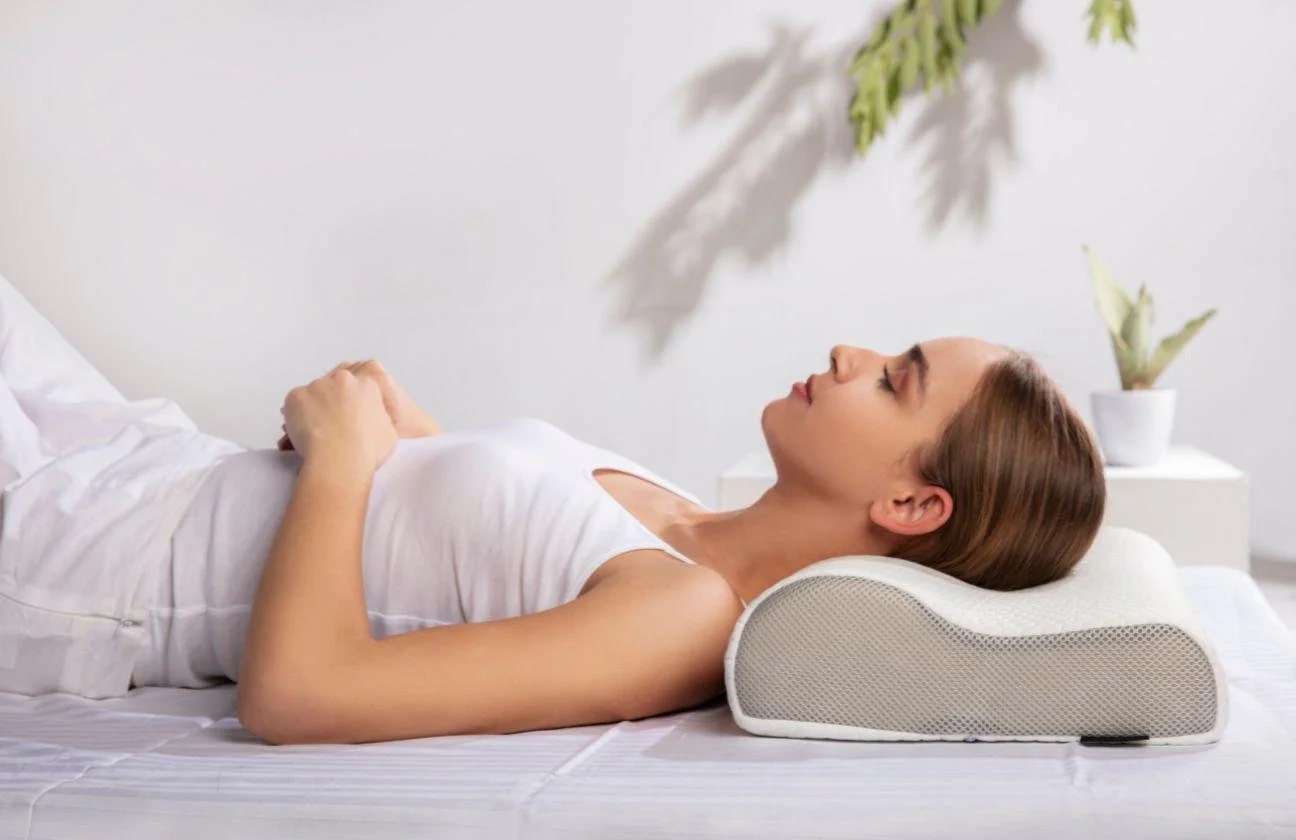
Waking up with a stiff neck? Constantly adjusting your pillow during the night? Or spending money on expensive orthopaedic pillows that don't seem to make a difference?
You're not alone.
Neck pain after sleeping is a common complaint, and one of the first things people often blame is their pillow.
But does the type of pillow you use really matter? Should you choose memory foam, a cervical pillow or a traditional feather pillow? And is an expensive orthopaedic pillow necessarily better?
At The Body Lab Physio in Ranelagh, Dublin, we regularly help people dealing with neck pain, stiffness and sleep-related discomfort.
The truth is, there isn't one perfect pillow for everyone. The best pillow is one that supports your neck comfortably, suits your sleeping position and allows you to get a good night's sleep.
Let's break down what actually matters.
Can Your Pillow Cause Neck Pain?
Your pillow can contribute to neck discomfort, particularly if it holds your head in an uncomfortable position for several hours.
Your neck, or cervical spine, has a natural curve. When you're sleeping, your pillow should help support your head and neck without forcing them into excessive bending or rotation.
For example:
A pillow that's too high may push your head forward or tilt it sideways.
A pillow that's too flat may leave your neck poorly supported.
A pillow that's too soft may collapse during the night.
A pillow that's too firm may create uncomfortable pressure.
However, it's important to understand that neck pain isn't always caused by your pillow or sleeping posture.
Stress, reduced movement, muscle sensitivity, previous injuries and other factors can also contribute to persistent neck pain.
Changing your pillow may help, but it isn't always the complete solution.
What Is the Best Type of Pillow for Neck Pain?
There are several different pillow types available, each with potential advantages and disadvantages.
1. Memory Foam Pillows
Memory foam pillows are popular because they contour to the shape of your head and neck.
They may provide more consistent support than pillows that flatten significantly during the night.
Potential benefits:
Contour around the neck and head
Available in different heights and firmness levels
May provide stable support throughout the night
Potential disadvantages:
Some are too firm or too high
Certain designs retain heat
Contoured shapes don't suit everyone
Our advice: Memory foam can be a good option if you prefer a supportive pillow, but the height and shape are more important than the material alone.
2. Cervical or Contour Pillows
Cervical pillows, sometimes called orthopaedic pillows, are designed with a curved shape to support the neck.
They often have a raised section under the neck and a lower area for the head.
These pillows aim to support the natural curvature of the cervical spine.
Potential benefits:
May improve comfort for some people with recurrent neck stiffness
Provide a more defined area of neck support
Some designs offer different heights for different sleeping positions
Potential disadvantages:
Can take time to get used to
May be uncomfortable if the contour doesn't suit your body
Not necessarily better than a standard pillow for everyone
Our advice: A cervical pillow is worth considering if you struggle to find comfortable neck support, but don't assume that the word "orthopaedic" automatically makes it the best choice.
3. Latex Pillows
Latex pillows tend to be supportive, responsive and relatively resistant to flattening.
Unlike some memory foam pillows, they spring back quickly after pressure is removed.
They may suit people who prefer a firmer, more consistent surface.
However, latex pillows can be expensive, and their firmness may not suit everyone.
4. Feather and Down Pillows
Feather and down pillows are generally soft and mouldable.
This can be helpful if you like adjusting the pillow to suit your sleeping position.
However, some lose their shape during the night, potentially reducing support.
If your pillow consistently collapses or needs to be folded to feel comfortable, it may be worth considering a different option.
5. Adjustable Pillows
Adjustable pillows allow you to add or remove filling to change the height and firmness.
This can be particularly useful because pillow height is one of the most important factors in finding a comfortable sleeping position.
Rather than choosing a fixed shape and hoping it suits you, an adjustable pillow allows you to experiment.
For many people, a height-adjustable pillow is a sensible starting point.
Best Pillow for Side Sleepers With Neck Pain
If you sleep on your side, your pillow needs to fill the space between your head and the mattress.
The goal is to keep your head comfortably aligned with the rest of your spine rather than allowing it to drop towards the mattress or tilt upwards.
<IMAGE: Side sleeper with head and neck comfortably aligned with spine>
A pillow that's too low may allow your head to tilt downwards.
A pillow that's too high may push your head in the opposite direction.
Your ideal pillow height will depend on factors such as shoulder width, mattress firmness and personal comfort.
Our recommendation: Side sleepers often benefit from a supportive pillow with enough height to fill the shoulder-to-head gap. Adjustable pillows can make finding the right height easier.
Best Pillow for Back Sleepers With Neck Pain
If you sleep on your back, your pillow should support your head and neck without pushing your chin excessively towards your chest.
<IMAGE: Back sleeper with appropriate head and neck support>
A very thick pillow can hold your neck in a forward-bent position for prolonged periods.
A lower or medium-height pillow may be more comfortable, depending on your anatomy and mattress.
Some people find that a gentle cervical contour provides additional comfort.
Our recommendation: Choose a pillow that supports the neck while allowing the head to rest comfortably without excessive forward bending.
What About Sleeping on Your Stomach?
Stomach sleeping usually requires turning your head to one side for extended periods.
For some people with sensitive necks, this position can aggravate symptoms.
If you regularly wake with neck pain and sleep on your stomach, experimenting with a side-sleeping position may help.
However, there's no need to force yourself into an uncomfortable sleeping position simply because it's considered better for posture.
Sleep quality matters too.
If you prefer stomach sleeping, a very low pillow or no head pillow may feel more comfortable, provided the position doesn't aggravate your symptoms.
Does Research Show That One Pillow Is Better Than Another?
Research suggests that pillow design can influence neck pain, sleep comfort and morning stiffness.
Some studies have reported improvements with supportive or specially designed cervical pillows.
However, the evidence is mixed, and there isn't strong enough research to recommend one particular pillow material or design for everyone.
A memory foam pillow isn't automatically better than latex.
An orthopaedic pillow isn't guaranteed to relieve neck pain.
And a more expensive pillow doesn't necessarily mean better results.
The most important factors are comfort, appropriate support and how your symptoms respond over time.
How Do You Know if Your Pillow Is Right for You?
Rather than focusing entirely on the brand or material, ask yourself:
Does my neck feel comfortably supported?
Am I constantly folding or adjusting the pillow?
Does my head feel pushed too far forward or sideways?
Do I regularly wake with increased neck stiffness?
Can I sleep comfortably without constantly changing positions?
Do my symptoms improve when I use a different pillow?
If you're unsure, try adjusting your existing pillow before immediately buying a new one.
For example, you might remove some filling from an adjustable pillow or trial a different height.
If you're considering buying a new pillow, choosing one with an adjustable height and a reasonable return policy can be helpful.
Can a Pillow Fix Chronic Neck Pain?
Sometimes changing your pillow can make a noticeable difference, particularly if your symptoms are strongly related to sleeping positions.
However, chronic neck pain is often more complex.
It may involve reduced neck strength, limited movement tolerance, headaches, muscular sensitivity or other contributing factors.
If you've been experiencing persistent neck pain for weeks or months, changing your pillow alone may not be enough.
That's where physiotherapy can help.
How Can Physiotherapy Help Neck Pain?
At The Body Lab, we focus on identifying the factors contributing to your neck pain rather than simply treating the painful area.
1. Neck Assessment
We assess your cervical range of motion, muscle function, symptom behaviour and relevant neurological signs.
We also discuss your sleeping habits, work environment and daily activities to understand when and why your symptoms occur.
2. Exercise Rehabilitation
Exercise is an important part of managing many types of persistent neck pain.
Depending on your assessment, your programme may include:
Cervical mobility exercises
Deep neck flexor strengthening
Neck muscle endurance exercises
Shoulder and upper-back strengthening
Gradual exposure to movements that currently feel uncomfortable
The goal is to improve your neck's ability to tolerate everyday activities.
3. Manual Therapy
Manual therapy may be used alongside exercise to help manage symptoms and improve movement tolerance.
However, hands-on treatment alone is rarely the complete answer for persistent neck pain.
We combine treatment with practical strategies that help you manage symptoms independently.
4. Sleep and Lifestyle Advice
We can also discuss sleeping positions, pillow selection and other factors that may be affecting your comfort.
Sometimes small changes to your sleeping environment can make a meaningful difference.
Our Verdict: Which Pillow Should You Choose?
If you're looking for the best pillow for neck pain, our advice is simple:
Don't choose a pillow based purely on marketing claims. Choose one that suits your sleeping position, supports your neck comfortably and helps you sleep well.
For side sleepers, this often means a supportive pillow with enough height to fill the gap between the shoulder and head.
For back sleepers, a lower or medium-height pillow may be more suitable.
Memory foam, latex and cervical pillows can all work well, but no single type is proven to be the best for everyone.
If you're unsure where to start, an adjustable pillow is a practical option because you can experiment with different heights.
And remember, you don't necessarily need an expensive pillow to sleep comfortably.
Neck Pain Treatment in Ranelagh, Dublin
Waking up with a painful, stiff neck can affect your sleep, concentration and quality of life.
At The Body Lab Physio, we take an individualised approach to neck pain, combining clinical assessment, evidence-informed treatment and progressive rehabilitation.
Whether your symptoms are related to sleeping, prolonged desk work or persistent neck discomfort, we'll help you understand the problem and develop a plan to improve your movement and function.
No unnecessary treatments. No expensive pillow recommendations without a reason. Just practical advice and a clear approach to recovery.
Struggling with persistent neck pain or morning stiffness?
Book a physiotherapy assessment at The Body Lab and start moving more comfortably.
The Body Lab Physio
Ranelagh, Dublin 6
The science of physiotherapy. The craft of recovery.
