
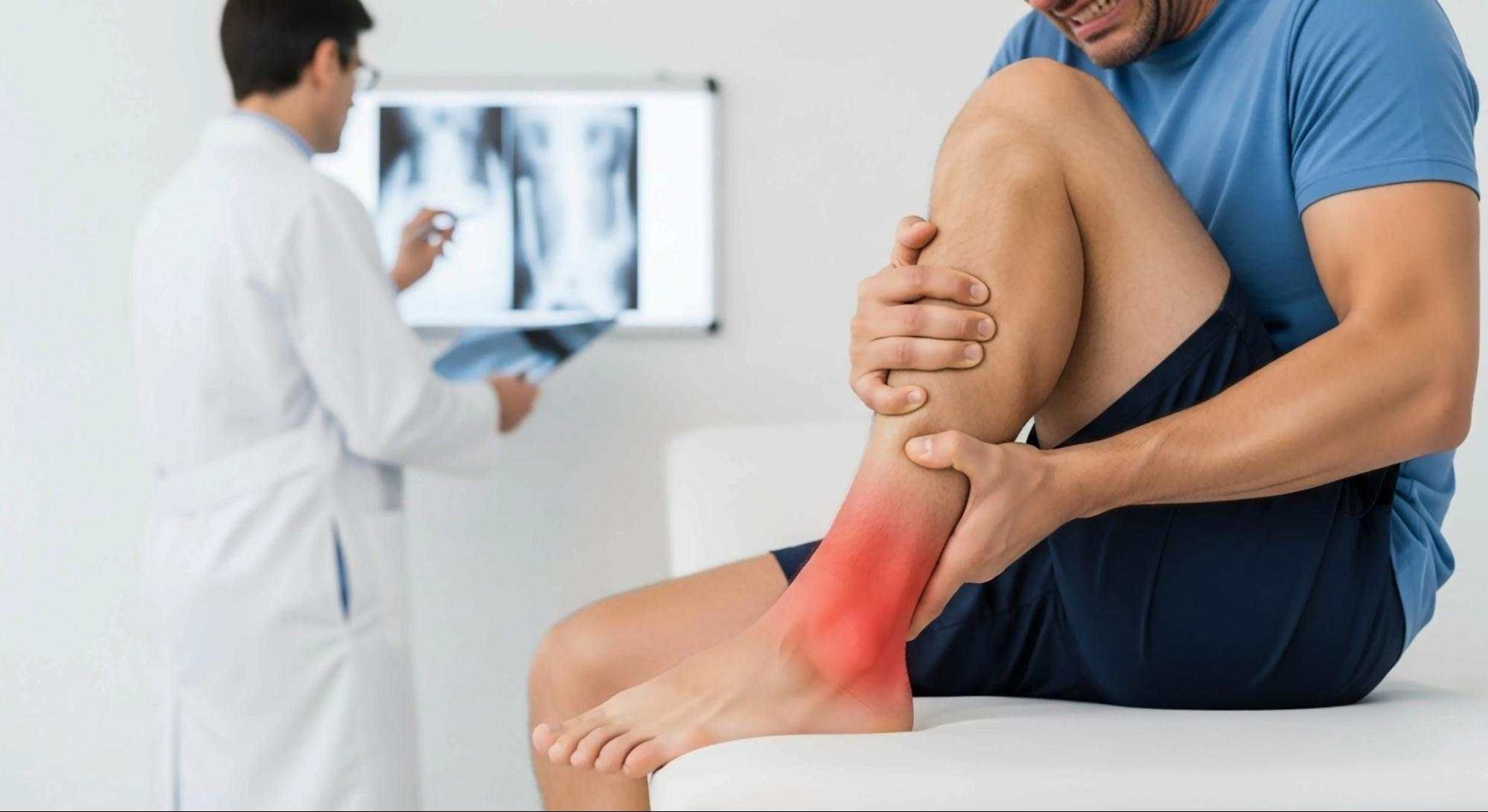
Achilles Tendon Pain: Why It Happens and How Physiotherapy Can Help
Pain at the back of your heel? Stiffness when you get out of bed? Struggling to run, walk or train without discomfort?
Achilles tendon pain is a common problem, particularly among runners, gym-goers and people who spend long hours on their feet. It can start as mild stiffness and gradually develop into persistent pain that affects everyday movement.
At The Body Lab Physio in Ranelagh, Dublin, we focus on understanding why your tendon is painful, what is contributing to the problem, and how to rebuild its strength so you can return to activity with confidence.
What Is Achilles Tendinopathy?
The Achilles tendon connects your calf muscles to your heel bone. It plays a major role in walking, running, jumping and pushing off the ground.
Achilles tendinopathy develops when the tendon struggles to tolerate the demands being placed on it.
This often happens after a sudden increase in running, walking, jumping or training intensity. However, it can also affect people who are less active.
There are two main types:
Midportion Achilles tendinopathy: Pain approximately 2–6 cm above the heel bone.
Insertional Achilles tendinopathy: Pain where the tendon attaches directly to the heel.
The distinction matters because the way we load and rehabilitate the tendon can differ.
What Causes Achilles Tendon Pain?
Achilles tendon pain is rarely caused by one single factor.
Common contributors include:
A sudden increase in running distance or intensity
Returning to exercise after a period of inactivity
Reduced calf strength or tendon-loading capacity
Excessive hill running or jumping
Changes in footwear or training surfaces
Inadequate recovery between training sessions
One of the biggest misconceptions is that Achilles tendon pain simply means the tendon is inflamed.
In many cases, the problem is better understood as a tendon that is struggling to cope with its current workload.
The solution isn't always to stop moving. It's to find the right amount of loading and gradually build the tendon’s capacity.
Common Symptoms of Achilles Tendinopathy
You may notice:
Pain or stiffness during your first steps in the morning
Discomfort at the back of the heel when walking or running
Pain that improves as you warm up but returns afterwards
Tenderness or thickening around the tendon
Difficulty performing calf raises
Increased stiffness the morning after exercise
Symptoms can vary significantly from person to person.
Some people can continue running with mild discomfort, while others struggle with basic activities such as walking or climbing stairs.
A sudden pop, sharp pain or inability to push off the foot may indicate a tendon rupture and requires urgent medical assessment.
How Do We Treat Achilles Tendon Pain at The Body Lab?
At The Body Lab, treatment starts with understanding the problem properly.
We don't rely on a generic exercise sheet or simply tell you to rest until the pain disappears.
Your rehabilitation is based on your symptoms, strength, activity levels and how your tendon responds to loading.
1. Assessment and Diagnosis
We assess your Achilles tendon, calf strength, ankle mobility and functional movements.
We also look at your training history, recent changes in activity and any factors that may be contributing to your symptoms.
The goal is to understand what your tendon can currently tolerate and what needs to improve.
2. Load Management
Complete rest may temporarily settle symptoms, but it doesn't necessarily improve the tendon's ability to handle activity.
Instead, we help you modify your training or daily activities without unnecessarily stopping everything.
This might involve reducing running volume, temporarily avoiding hills or jumping, or adjusting how frequently you train.
The aim is simple: reduce unnecessary irritation while keeping the tendon active.
3. Progressive Strengthening
Exercise is the foundation of Achilles tendinopathy rehabilitation.
Depending on your symptoms and current capacity, your programme may include:
Isometric calf exercises: Controlled holds that can introduce tendon loading.
Seated calf raises: Strengthening the calf complex, particularly the soleus.
Standing heel raises: Building strength and endurance through progressively challenging movements.
Heavy slow resistance training: Gradually increasing resistance to improve strength and tendon-loading capacity.
Running and jumping progressions: Preparing the tendon for the demands of sport.
Not everyone starts at the same level.
Someone struggling to walk comfortably needs a different programme from a runner preparing for a marathon.
That's why rehabilitation should be individualised.
4. Manual Therapy When Appropriate
Manual therapy may help with associated calf discomfort or ankle stiffness.
However, massage and hands-on treatment alone are unlikely to resolve Achilles tendinopathy in the long term.
We use these treatments when appropriate, alongside progressive exercise and movement rehabilitation.
5. Return to Running and Sport
Getting rid of pain is only part of the process.
If you're a runner or athlete, your Achilles tendon needs to tolerate repeated loading, faster movements and higher forces before returning fully to sport.
We gradually rebuild calf strength, endurance and impact tolerance so your return to training is based on your actual capacity rather than guesswork.
Should You Stretch an Injured Achilles Tendon?
Not always.
Stretching is commonly recommended for Achilles pain, but it isn't necessarily the best starting point.
For people with insertional Achilles tendinopathy, aggressive calf stretching or dropping the heel below a step can increase compression around the tendon attachment and aggravate symptoms.
In other cases, gentle mobility work may be useful.
The important thing is identifying which type of Achilles problem you have before deciding which exercises are appropriate.
Can You Continue Running With Achilles Tendon Pain?
In some cases, yes.
You don't always need to stop running completely.
If symptoms remain manageable and the tendon responds well over the following 24 hours, a modified running programme may be appropriate.
We often use morning stiffness, pain response and functional capacity to guide progression.
If symptoms are consistently worsening, however, your training load may need to be reduced.
The aim is to keep you active while allowing the tendon to recover and adapt.
How Long Does Achilles Tendinopathy Take to Recover?
Recovery depends on how long you've had symptoms, your current tendon capacity and the demands of your daily activities or sport.
Some people notice significant improvements within 6–12 weeks. Others, particularly those with long-standing symptoms, may require several months of structured rehabilitation.
Tendons adapt gradually.
A short period of pain relief doesn't necessarily mean the tendon is ready for unrestricted running or jumping.
The goal is not just to settle the pain. It's to build a stronger, more resilient tendon.
When Should You See a Physiotherapist?
Consider a physiotherapy assessment if:
Your Achilles pain has lasted more than a couple of weeks
Morning stiffness keeps returning
Running or walking consistently aggravates your symptoms
You've rested but the pain returns when you become active again
You're unsure how to strengthen your tendon safely
Your symptoms are preventing you from training or enjoying everyday activities
The earlier you understand what's contributing to your symptoms, the easier it is to develop a clear plan.
Achilles Tendon Pain Treatment in Ranelagh, Dublin
At The Body Lab Physio, we combine clinical assessment, biomechanics, progressive strengthening and practical advice to help you move better and return to the activities that matter to you.
Whether you're dealing with a recent Achilles injury or persistent tendon pain, we'll help you understand the problem and develop a rehabilitation programme suited to your goals.
No generic protocols. No unnecessary rest. Just a clear, evidence-informed approach to recovery.
Struggling with Achilles tendon pain?
book now
The Body Lab Physio
11 Oxford Lane, Ranelagh, Dublin 6
01 255 4450
The science of physiotherapy. The craft of recovery.
