
Why the Nervous System May Be the Missing Piece in Musculoskeletal Care.
I have worked for a while with a standard approach to treating musculoskeletal pain. Find the area of pain, treat the structure, strengthen the surrounding muscles and gradually return the person to normal activity.
But there is another question that is always in my head:
What happens when the body is physically able to recover from a musculoskeletal injury/symptom but the nervous system is never given the chance to switch it off?
Ain’t that just going to create a vicious cycle of pain though?
As an MSK physiotherapist in Dublin I have found that many patients have persistent neck pain, headaches, back pain, muscle tension and even repeat injury to muscles. While their scans may explain their pain, the intensity of their symptoms is often greater than expected.
These individuals are undergoing appropriate physical rehabilitation in the form of exercise, stretching and strengthening to assist their return to full activity despite their MSK symptoms.
Many of these patients presented with bodies capable of recovery but persistently switching on into pain, sometimes even while at rest and indeed during sleep.
Even when they got enough sleep to allow their bodies to recover from the wear and tear of daily activities, the quality of that sleep was poor. Frequently, patients described being so preoccupied with work and stressors of life that even though they were physically exhausted, they were unable to relax.

Dublin’s Stress Problem is Bigger Than We Think
One major caveat to this though is that stress is notoriously difficult to quantify as it encompasses more than one physiological variable. This means that whereas you can measure up psychological distress, and/or get a read on sleep, and/or assess heart rate variability, and get a reading of levels of cortisol etc, none of these variables individually will tell you that the person is ‘stressed’ or not.
However, recent Irish data provide a reason for concern.
12% of Dublin residents likely to have a mental health problem, no change from 2023 (Health Ireland Survey 2024).
8.6% of people in the Dublin and Northeast health region reported in the 2025 Irish Health Survey that they needed mental-health consultation or treatment in the past

The Nervous System is Part of Rehabilitation
The autonomic nervous system helps regulate the many functions of the body which are not under conscious control including heart rate, blood pressure, digestion and respiratory functions and it can influence a person’s response to stress.
The autonomic nervous system, which governs heart rate, blood pressure, digestion and breathing amongst other functions, is dominated by two subdivisions. The sympathetic nervous system enables activities of a ‘mobilising’ nature such as fighting and fleeing whilst the parasympathetic system supports recovery.
In general terms, the Sympathetic nervous.
Why I use HRV with patients?
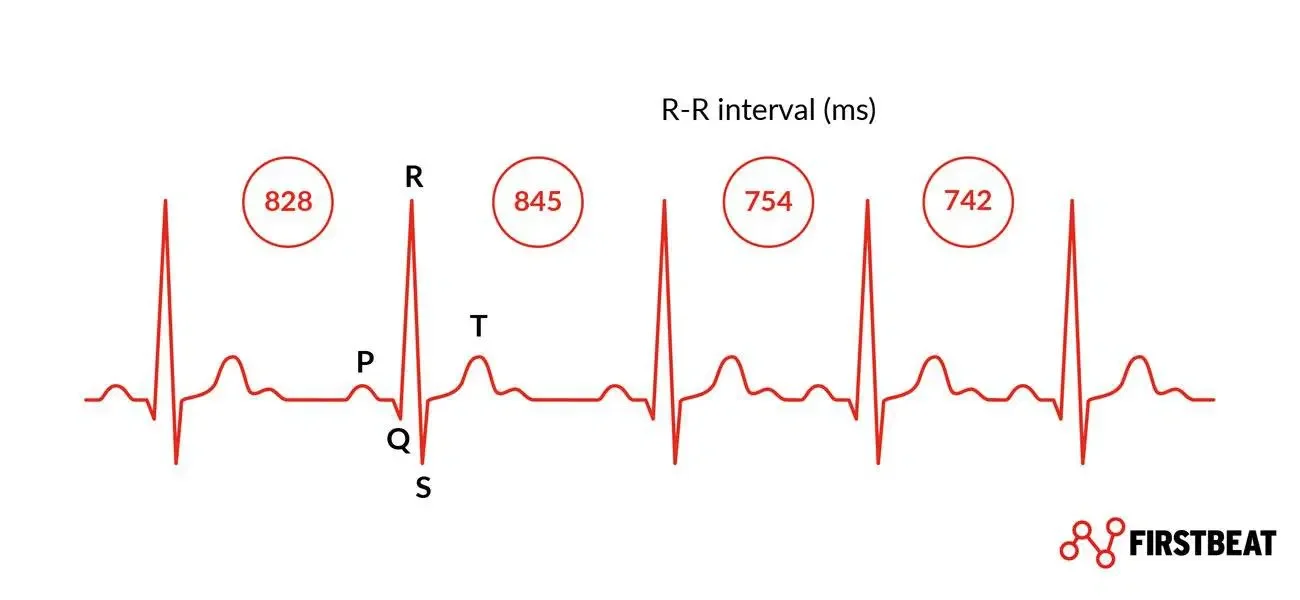
These variations in the time intervals between individual heart beats are denoted by the term heart rate variability or HRV for short.
Many people associate a healthy heart with that of a metronome, pumping at a constant frequency.
Many people believe that a healthy heart functions like a metronome, beating to a constant rhythm. However, in reality, the cardiovascular system is able to make adjustments to ensure that the heart can cope with changes in breathing, physical activity and posture, as well as with emotional states and environmental factors. Because of this, HRV provides insights into the body’s autonomic regulation and flexibility.
One low reading does not mean the person is stressed.
The influence of sleep, illness, alcohol, training, medications etc. on HRV is immense and outside the control of most individuals for extended periods.
This is why I am more interested in tracking trends than looking at individual readings.
For patients that are already wearing and measuring for another reason, I can also monitor their HRV and look for trends in the following:
Sleep duration
Sleep consistency
Resting heart rate
Perceived stress
Training load
Energy levels
Pain
Recovery
Lifestyle behaviours
Note that wearable technologies do not make a diagnosis for a patient’s condition. All information obtained from a wearable needs to be integrated with the patient’s symptoms and the rest of the clinical presentation.
Studies of slow breathing have been assessed in a systematic review and meta-analysis of over 200 studies of voluntary slow breathing. The studies included examined the effect of slow breathing on vagally mediated HRV during breathing and after breathing. Long-term effects of slow breathing were also investigated.
Studies also have demonstrated changes in autonomic activity and CNS functioning in addition to reduced relaxation and psychological arousal (i.e., stress) following slow breathing interventions.
Of course, studies into HRV cannot reveal any flaws into using HRV as a stress meter but rather describe the physiological effects of slow breathing.
It is one useful physiological signal among many.
From breathing to a broader autonomic protocol
I outline below how my application of breathing as part of a broader autonomic strategy has evolved to that of a simple, conservative and useful clinical tool that is independent of expensive equipment or drugs.
The protocol combines several components:
1. Controlled breathing
Breathing techniques are used to deliberately slow respiratory rate and encourage a more regulated autonomic state.
The objective isn’t simply to “take deep breaths”.
It is to develop better control over breathing and use respiration as a pathway for influencing autonomic activity.
A 12-week randomised trial involving 100 participants found that regular slow-breathing practice reduced psychological stress, although the study did not demonstrate a significant difference in HRV between different breathing-ratio groups.
The finding is important because it demonstrates why responsible clinicians should avoid oversimplifying the science.
Breathing can influence stress.
But the precise mechanisms, optimal breathing patterns, and clinical effects require further research.
2. Sensory and reflex-based techniques
I incorporate selected reflexology and sensory techniques as part of the relaxation component of the session.
Here, I am deliberately cautious with the language.
I do not tell patients that pressing a particular point “switches on the vagus nerve”.
The evidence does not justify such a simplistic claim.
Instead, I view these techniques as sensory inputs that may help patients focus their attention on their bodies, slow down and enter a more relaxed state.
3. Visualisation
The patient is guided through structured visualisation and attention exercises.
This serves two purposes. First, it gives the patient something active to focus on rather than simply telling them to “relax”.
Second, it helps develop the ability to deliberately shift attention away from threat, work, and constant external stimulation.
4. Sleep
Sleep is not an optional add-on.
It is part of the intervention.
Poor sleep can influence pain sensitivity, emotional regulation, recovery and stress physiology.
Research examining the relationship between sleep and the HPA axis suggests that reductions in sleep quality can increase the body’s stress reactivity.
Therefore, rather than telling patients to simply “sleep more”, I look at the behaviours surrounding sleep:
Consistent sleep and wake times
Morning light exposure
Exercise
Evening stimulation
Caffeine timing
Alcohol
Screen use
Bedroom environment
Workload
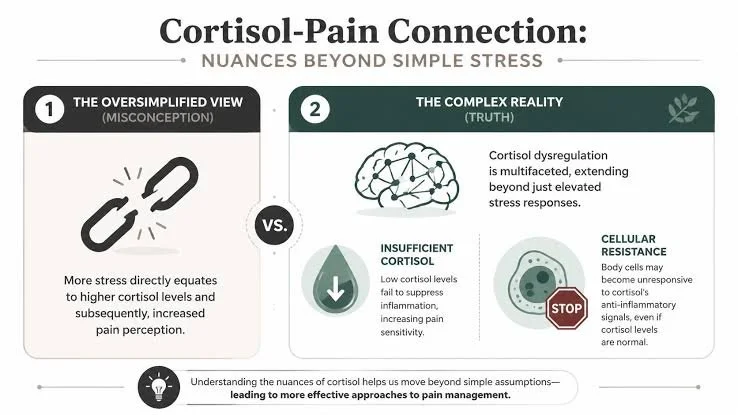
What about cortisol?
“Cortisol” has become a popular word in the wellness industry.
Unfortunately, it is often presented incorrectly.
Cortisol is not a “bad hormone”.
We need it.
It helps regulate metabolism, immune activity, blood pressure, and the body’s response to stress,
Cortisol also follows a circadian rhythm, with levels normally changing substantially across the day. The goal is therefore not to eliminate cortisol.
It is to support an appropriately regulated circadian rhythm and an appropriate response to stress.
This is one reason I encourage patients to think about their entire day rather than looking for a single relaxation technique.
Morning light.
Movement.
Exercise.
Social interaction.
Workload.
Breathing.
Sleep timing.
Evening light exposure.
All of these behaviours interact with the biological systems responsible for regulating our daily rhythms.
The intervention therefore becomes much bigger than a breathing exercise.
It becomes lifestyle medicine integrated into physiotherapy.
The connection to musculoskeletal pain
This is ultimately why I developed the protocol.
A physiotherapist can spend 45 minutes treating someone’s thoracic spine, neck, or lumbar region.
But what happens when they leave the clinic and spend the next ten hours under psychological stress, sleep for five hours and wake up the following morning already anticipating another difficult day?
We cannot manually release someone’s nervous system.
We cannot stretch away chronic stress.
And we certainly cannot manipulate our way out of poor sleep.
Musculoskeletal rehabilitation should therefore consider more than muscles, joints, and tissues.
A person’s pain experience is influenced by physical, psychological and social factors. For some patients, particularly those with persistent pain and high levels of stress, improving their capacity to regulate stress may be an important part of improving their overall recovery.
This does not replace strengthening
It does not replace appropriate loading.
It does not replace medical assessment.
It does not mean every patient with back pain needs a “vagus nerve treatment”.
It means that sometimes the most useful question is not simply:
“What structure is painful? But also what state is this person’s nervous system operating in?”
What are patients reporting?
In my clinical practice, patients undergoing this approach have reported improvements in areas including perceived stress, sleep, and gastrointestinal function.
Some patients also report feeling calmer and more capable of switching off at night.
These observations are encouraging, but they are clinical observations, not proof of efficacy.
I currently use patient-reported outcomes and wearable-derived information, including HRV and sleep metrics, to monitor changes over time.
The next logical step is to collect this information systematically.
If the intervention appears promising, it should ultimately be tested properly through prospective research, with defined inclusion criteria and validated stress and pain measures, appropriate controls and pre-specified outcomes.
That is the difference between an interesting clinical idea and evidence-based treatment.
Perhaps the future of physiotherapy is not purely physical
Physiotherapy has traditionally been associated with movement, exercise, manual therapy and rehabilitation.
These remain fundamental.
But modern physiotherapy increasingly recognises that the human body does not operate as a collection of independent systems.
Sleep affects recovery.
Stress affects pain.
Pain affects movement.
Movement affects mood.
Breathing interacts with autonomic regulation.
And the autonomic nervous system continuously communicates with the systems responsible for cardiovascular, respiratory and gastrointestinal function.
The challenge is avoiding two extremes.
On one side, we have purely structural thinking:
"Your back hurts because something is tight."
On the other, we have the wellness industry's tendency to attribute almost everything to the vagus nerve:
"Your vagus nerve is switched off, so stimulating it will fix everything."
Neither explanation is sufficient.
The reality is much more interesting.
The nervous system, musculoskeletal system, endocrine system, sleep and behaviour are interconnected — but that does not mean every association is causal, or that one intervention can fix everything.
My goal with this protocol is therefore relatively simple:
“Help patients develop better physiological and behavioural tools for managing stress, while continuing to treat the physical problem in front of us.”
Because perhaps the future of musculoskeletal care isn't about choosing between treating the body or treating the mind.
Perhaps it is about recognising that we were never dealing with two separate systems in the first place.
If stress and persistent pain sound familiar, book an assessment at The Body Lab in Ranelagh.
Department of Health. Healthy Ireland Survey 2024. https://www.gov.ie/en/publication/d1ab3-healthy-ireland-survey-2024
Central Statistics Office. Irish Health Survey 2025: General Mental Health. https://www.cso.ie/en/releasesandpublications/ep/p-ihsmr/irishhealthsurvey-mainresults2025/generalmentalhealth/
PwC Ireland. Workforce Hopes and Fears Survey 2024. https://www.pwc.ie/media-centre/press-releases/2024/workforce-hopes-and-fears-survey.html
PwC Ireland. Workforce Hopes and Fears Survey 2025. https://www.pwc.ie/media-centre/press-releases/2025/workforce-hopes-and-fears-survey-2025.html
Buscemi V, Chang W-J, Liston MB, McAuley JH, Schabrun SM. The role of perceived stress and life stressors in the development of chronic musculoskeletal pain disorders: a systematic review. J Pain. 2019;20(10):1127–1139.
Ortego G, Villafañe JH, Doménech-García V, Berjano P, Bertozzi L, Herrero P. Is there a relationship between psychological stress or anxiety and chronic nonspecific neck-arm pain in adults? A systematic review and meta-analysis. J Psychosom Res. 2016;90:70–81. https://doi.org/10.1016/j.jpsychores.2016.09.006
The biopsychosocial factors associated with development of chronic musculoskeletal pain: an umbrella review and meta-analysis of observational systematic reviews. https://pmc.ncbi.nlm.nih.gov/articles/PMC10984407/
Laborde S, Allen MS, Borges U, et al. Effects of voluntary slow breathing on heart rate and heart rate variability: a systematic review and a meta-analysis. Neurosci Biobehav Rev. 2022;138:104711.
Birdee G, Nelson K, Wallston K, et al. Slow breathing for reducing stress: the effect of extending exhale. Complement Ther Med. 2023;73:102937.
